A Playful Puzzle That Says More Than You Think
Introduction
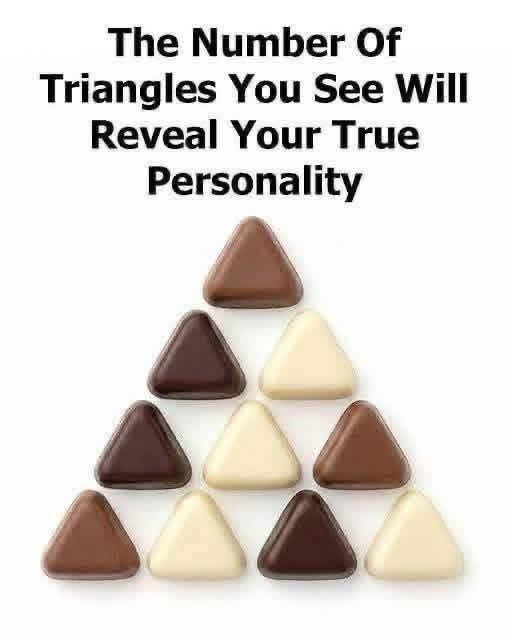
“How many triangles do you see?”
It sounds like a simple question—almost childish. But this tiny visual puzzle has confused students, challenged adults, and sparked debates all over the world. Some people see 6. Others see 9. A few confidently say 18… and they’re all absolutely sure they’re right.
This puzzle isn’t really about triangles. It’s about how we think, how we observe, and how our brains love shortcuts.
So let’s break it down—recipe style.
Ingredients
To solve (and enjoy) the triangle puzzle, you’ll need:
- 1 triangle-based image (usually overlapping or subdivided)
- 1 curious brain
- 2 working eyes
- A pinch of patience
- A dash of creativity
- Optional: a friend to argue with
- Optional garnish: confidence (even if misplaced)
History
Triangle-counting puzzles have been around for decades, often appearing in:
- Old math textbooks
- IQ and logic tests
- Newspapers and magazines
- Social media posts and viral challenges
They originate from visual reasoning problems, designed not to test math skills—but perception and attention to detail. Teachers used them to show students that seeing is not the same as observing.
Formation (How the Puzzle Is Built)
Most triangle puzzles are formed using:
- One large outer triangle
- Smaller triangles inside it
- Lines that intersect at different angles
These intersections create:
- Small triangles
- Medium triangles
- Large triangles
- Hidden triangles made from combinations of smaller ones
Your brain often spots the obvious ones first… then stops too early.
Method 1: The Naive Method
- Count only the smallest visible triangles.
- Feel confident.
- Give your answer quickly.
- Be wrong.
This is the most common method—and the most human.
Method 2: The Systematic Method
- Count small triangles first.
- Then count medium-sized combinations.
- Then count large triangles.
- Then count overlapping or inverted triangles.
- Double-check.
This method takes longer—but reveals the truth.
Method 3: The “Wait… Oh Wow” Method
- Think you’re done.
- Suddenly see another triangle.
- Realize there are more.
- Lose track.
- Question reality.
Highly effective. Emotionally dangerous.
Instructions (Step-by-Step Thinking)
- Slow down—don’t rush.
- Trace triangles with your finger or eye.
- Rotate the image mentally.
- Look for triangles pointing up and down.
- Look for triangles made of multiple pieces.
- Recount.
- Recount again.
Benefits
Believe it or not, this puzzle has real benefits:
- 🧠 Improves visual intelligence
- 🔍 Sharpens attention to detail
- 🧩 Strengthens problem-solving skills
- ⏳ Encourages patience
- 😄 Creates playful frustration (the good kind)
- 🗣 Sparks discussion and debate
It’s brain exercise disguised as fun.
What This Puzzle Really Teaches
- We miss things when we assume answers too quickly
- Confidence ≠ correctness
- Different people genuinely see different things
- Careful observation beats speed
- The obvious answer is rarely the full answer
Deep for a triangle puzzle, right?
Who Loves This Puzzle? (The Lovers)
- Puzzle enthusiasts
- Teachers and students
- Psychologists
- Designers and architects
- Logic-game fans
- People who love being right
- People who love proving others wrong
Also: social media comment sections 😅
Common Mistakes
- Counting only the smallest triangles
- Forgetting combined shapes
- Ignoring inverted triangles
- Stopping too soon
- Trusting your first instinct
Your brain wants efficiency. This puzzle punishes that.
Conclusion (The Logical One)
“How many triangles do you see?” is not a trick question—it’s a thinking test. The correct answer depends on whether you count all possible formations, not just what jumps out first.
Final Conclusion (The Human One)
This puzzle reminds us that perception is limited, patience matters, and there’s always more hiding beneath the surface—whether in a drawing, a problem, or life itself.