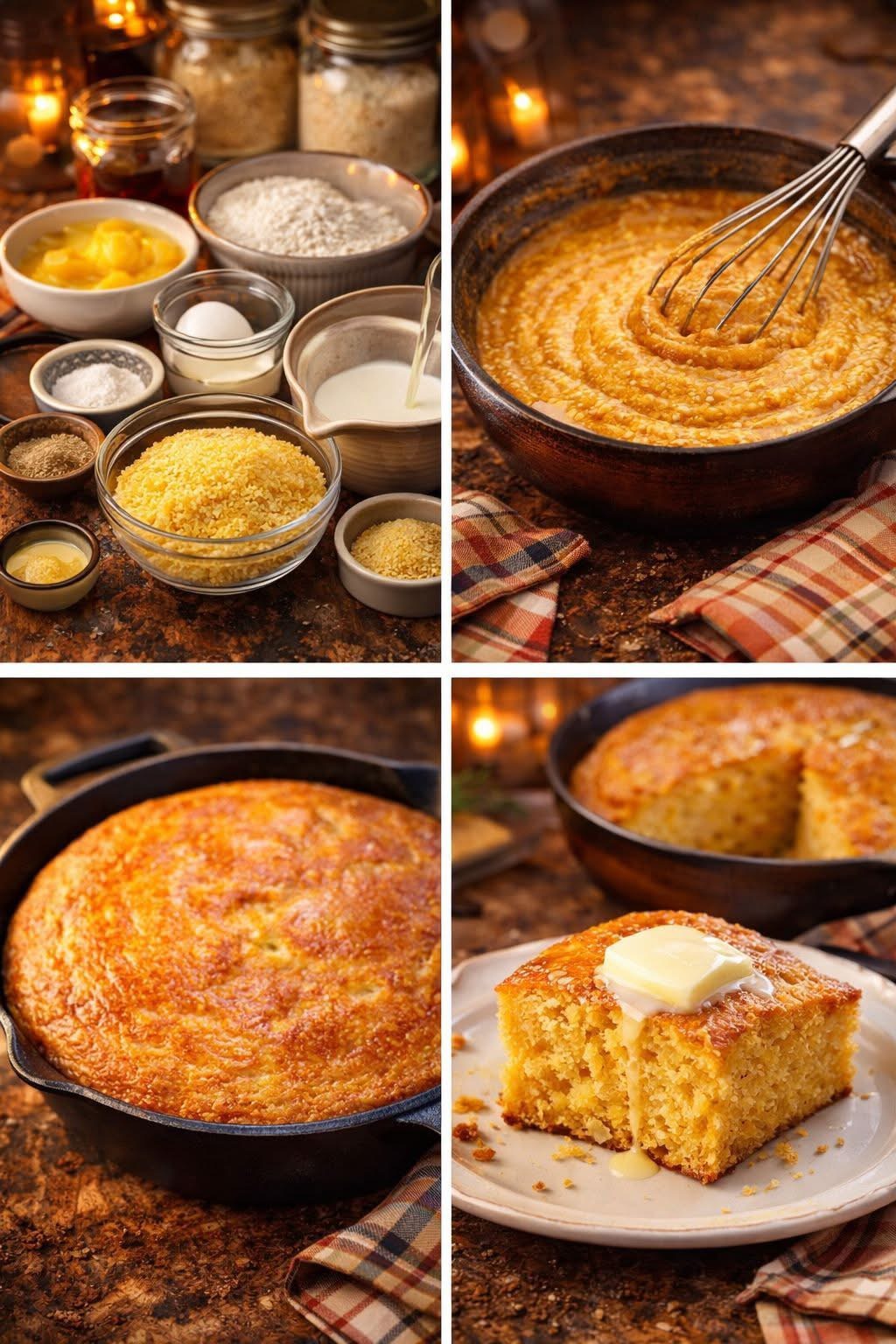
A Complete Guide with History, Ingredients, Preparation Methods, Benefits, and Why People Love It
1. Introduction
Buttermilk cornbread is a traditional baked bread made primarily from cornmeal and buttermilk. It is known for its soft, moist interior and slightly crisp golden crust. Cornbread has a comforting flavor that is mildly sweet or savory depending on how it is prepared.
The addition of buttermilk gives the bread a richer taste, tender texture, and slight tang that balances the natural sweetness of cornmeal. Buttermilk also helps the bread rise and stay soft.
Buttermilk cornbread is commonly served with:
- Soups
- Chili
- Barbecue meals
- Southern-style dishes
It can also be enjoyed on its own with butter, honey, or jam.
2. History of Cornbread
Cornbread has deep historical roots in North America. Before European settlers arrived, Indigenous peoples were already grinding corn and using it to create simple breads.
These early breads were cooked over open fires and were made with basic ingredients like ground corn and water.
When European settlers arrived:
- They adopted corn as a staple food.
- Wheat flour was often scarce, so cornmeal became widely used.
By the 18th and 19th centuries, cornbread had become a major part of Southern cooking. The addition of buttermilk, eggs, and baking soda improved the texture and flavor.
Today, buttermilk cornbread is considered a classic comfort food and remains popular across many regions.
3. Ingredients
Main Ingredients
- 1 cup cornmeal
- 1 cup all-purpose flour
- ¼ cup sugar (optional depending on preference)
- 1 tablespoon baking powder
- ½ teaspoon baking soda
- ½ teaspoon salt
- 2 eggs
- 1 cup buttermilk
- ¼ cup melted butter
- 2 tablespoons vegetable oil
Optional Ingredients
These can add extra flavor:
- Honey
- Corn kernels
- Jalapeños
- Cheddar cheese
- Green onions
4. Equipment Needed
- Mixing bowls
- Whisk or spoon
- Measuring cups and spoons
- Baking pan or cast iron skillet
- Oven
A cast iron skillet is often preferred because it creates a crisp crust.
5. Preparation Method
Step 1: Preheat the Oven
Preheat the oven to 200°C (400°F).
If using a cast iron skillet, place it in the oven while it heats so the pan becomes hot.
Step 2: Mix Dry Ingredients
In a large bowl combine:
- Cornmeal
- Flour
- Sugar
- Baking powder
- Baking soda
- Salt
Mix well to distribute the ingredients evenly.
Step 3: Mix Wet Ingredients
In another bowl whisk together:
- Eggs
- Buttermilk
- Melted butter
- Vegetable oil
Mix until smooth.
Step 4: Combine Mixtures
Slowly pour the wet ingredients into the dry ingredients.
Stir gently until just combined.
Avoid overmixing because it can make the cornbread dense.
The batter should be slightly thick but pourable.
6. Formation of the Cornbread
Formation refers to shaping and preparing the batter before baking.
- Lightly grease a baking pan or hot skillet.
- Pour the batter evenly into the pan.
- Smooth the surface using a spatula.
The batter will spread naturally and form a flat layer ready for baking.
Some bakers like to score the top lightly so it becomes easier to cut after baking.
7. Baking Instructions
- Place the pan in the preheated oven.
- Bake for 20–25 minutes.
- The top should become golden brown.
- Insert a toothpick in the center; it should come out clean.
Let the cornbread cool for 10 minutes before slicing.
8. Alternative Cooking Methods
1. Cast Iron Skillet Method
This traditional method produces a crispy crust.
Steps:
- Heat the skillet in the oven first.
- Add butter to the hot pan.
- Pour batter in immediately.
The hot skillet creates a crunchy edge.
2. Muffin Method
The batter can also be baked in muffin tins.
- Bake at 190°C (375°F)
- Time: 15–18 minutes
This creates individual cornbread portions.
3. Stove-Top Skillet Method
Some versions are cooked like thick pancakes on a covered skillet.
This method was common in early rural kitchens before ovens were widely available.
9. Benefits of Buttermilk Cornbread
1. Good Energy Source
Cornmeal provides carbohydrates that supply energy.
2. Rich Flavor
Buttermilk adds depth and a slight tanginess.
3. Versatile Food
Cornbread can be served sweet or savory.
4. Easy to Make
The recipe requires simple ingredients and basic techniques.
5. Nutritious Additions
Ingredients like corn, cheese, or vegetables can increase nutritional value.
10. Tips for Perfect Cornbread
- Do not overmix the batter.
- Use fresh baking powder for better rise.
- Bake in a hot skillet for a crisp crust.
- Let the bread rest before slicing.
11. Why People Love Buttermilk Cornbread
Buttermilk cornbread has many lovers because it combines simple ingredients with comforting flavor.
People enjoy it because:
- It pairs well with many meals.
- It has a soft interior and crispy edges.
- It can be eaten sweet or savory.
- It is warm and satisfying.
Families often serve it during gatherings, barbecues, and traditional dinners.
Children enjoy it with honey or butter, while adults often pair it with soups and hearty dishes.
12. Conclusion
Buttermilk cornbread is a timeless bread that reflects the rich culinary traditions of early American cooking. Made from cornmeal, buttermilk, and simple pantry ingredients, it produces a soft and flavorful bread that can complement many meals.
Its long history, easy preparation, and comforting taste have helped it remain a beloved dish for generations. Whether baked in a cast iron skillet, muffin pan, or traditional baking dish, buttermilk cornbread continues to be a favorite for home cooks and food lovers around the world.