Introduction
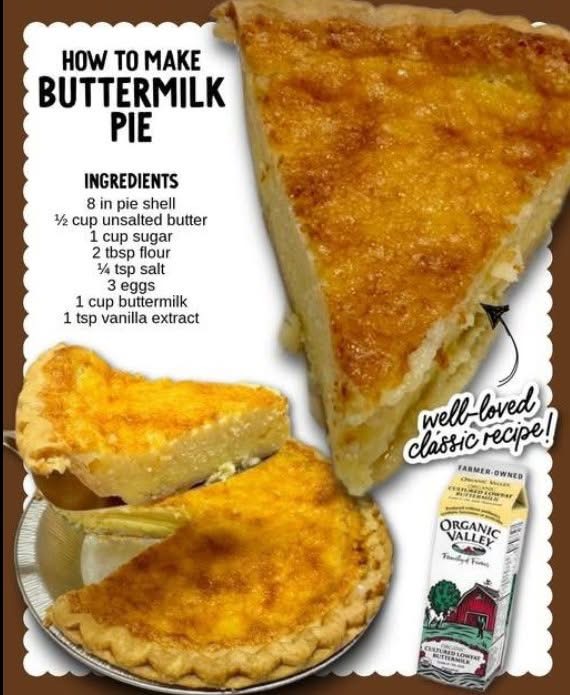
Old-Fashioned Buttermilk Pie is a beloved Southern dessert known for its simple ingredients, creamy texture, and delicate balance of sweetness and tang. Despite its humble origins, this pie has stood the test of time and remains a staple in many American kitchens. Often compared to custard pie or chess pie, buttermilk pie is unique because of the slight tanginess of buttermilk, which gives the filling a rich flavor and smooth consistency.
This pie is particularly popular in the Southern United States where traditional recipes have been passed down through generations. Its charm lies in its simplicity—most of the ingredients are pantry staples, making it an easy yet impressive dessert for family gatherings, holidays, or everyday indulgence.
History of Buttermilk Pie
Buttermilk pie traces its roots back to the early settlers of the American South in the 18th and 19th centuries. At that time, families relied heavily on ingredients they produced on farms. Buttermilk was a common byproduct of butter making, and cooks sought creative ways to use it.
Because refrigeration was limited, recipes needed to rely on ingredients that were readily available and stable. Eggs, sugar, butter, flour, and buttermilk became the foundation of this classic pie.
Over time, buttermilk pie became a hallmark dessert in Southern cuisine. Each region developed slight variations—some added lemon zest, vanilla, or nutmeg to enhance the flavor.
Today, buttermilk pie remains a nostalgic dessert, often associated with comfort, tradition, and home baking.
Ingredients
For the Pie Crust
- 1 ¼ cups all-purpose flour
- ½ teaspoon salt
- ½ cup cold unsalted butter (cut into cubes)
- 3–4 tablespoons ice water
Alternative: A ready-made 9-inch pie crust can also be used.
For the Buttermilk Filling
- 1 ½ cups granulated sugar
- 3 large eggs
- ½ cup unsalted butter (melted)
- 3 tablespoons all-purpose flour
- 1 cup buttermilk
- 1 tablespoon lemon juice
- 1 teaspoon vanilla extract
- ¼ teaspoon salt
- ¼ teaspoon grated nutmeg (optional)
Preparation Methods
Method 1: Preparing the Pie Crust
- In a bowl, mix flour and salt.
- Add cold butter cubes and cut them into the flour using a pastry cutter or fork until the mixture resembles coarse crumbs.
- Add ice water gradually and mix until dough forms.
- Shape the dough into a disk and refrigerate for 30 minutes.
- Roll out the dough on a floured surface and place it into a 9-inch pie dish.
- Trim and crimp the edges as desired.
Method 2: Preparing the Filling
- Preheat oven to 350°F (175°C).
- In a large bowl, whisk together sugar and eggs until smooth.
- Add melted butter and mix well.
- Stir in flour to help thicken the filling.
- Add buttermilk, lemon juice, vanilla extract, and salt.
- Mix until the filling is smooth and fully combined.
Baking Instructions
- Pour the prepared filling into the unbaked pie crust.
- Sprinkle nutmeg on top if desired.
- Bake for 45–55 minutes until the center is set and the top is lightly golden.
- Remove from oven and allow the pie to cool completely.
- Chill for 2–3 hours for best texture before serving.
Formation and Texture
The magic of buttermilk pie happens during baking.
- The eggs create a custard-like structure.
- Butter adds richness and flavor.
- Flour thickens the filling slightly.
- Buttermilk gives the pie its signature tangy taste.
As it bakes, the filling forms a delicate golden crust on top while the inside becomes silky and creamy.
The final texture should be:
- Soft and custard-like in the center
- Slightly firm around the edges
- Lightly caramelized on top
Benefits of Buttermilk Pie
1. Simple Ingredients
Most of the ingredients are common pantry items, making it easy to prepare.
2. Budget Friendly
This pie was originally created as an economical dessert.
3. Rich in Calcium
Buttermilk contains calcium which supports bone health.
4. Comfort Food
The pie provides emotional comfort due to its nostalgic flavors and homemade warmth.
5. Customizable
Cooks can add flavors such as:
- Coconut
- Lemon zest
- Cinnamon
- Bourbon
Popular Variations
Many bakers enjoy experimenting with the classic recipe.
Lemon Buttermilk Pie
Add extra lemon zest and juice for a brighter citrus flavor.
Coconut Buttermilk Pie
Mix shredded coconut into the filling.
Bourbon Buttermilk Pie
Add a tablespoon of bourbon for a deeper Southern flavor.
Spiced Buttermilk Pie
Add cinnamon, nutmeg, or cardamom for a warm spice profile.
Lovers of Buttermilk Pie
Buttermilk pie has a loyal following among dessert lovers.
Home Bakers
Many home cooks enjoy making it because the recipe is simple and forgiving.
Southern Cuisine Enthusiasts
People who appreciate traditional Southern cooking often consider buttermilk pie a classic.
Custard Dessert Fans
Those who enjoy custard pies, chess pies, or flan often love the creamy texture of buttermilk pie.
Holiday Gatherings
Families frequently serve it during Thanksgiving, Christmas, and Sunday dinners.
Tips for Perfect Buttermilk Pie
- Use real cultured buttermilk for the best flavor.
- Do not overbake or the filling may crack.
- Let the pie cool completely so the custard sets properly.
- Use room temperature eggs for smoother mixing.
Conclusion
Old-Fashioned Buttermilk Pie is a timeless dessert that celebrates simplicity, tradition, and flavor. Originating from the resourceful kitchens of the American South, this pie proves that extraordinary desserts can come from the most basic ingredients.
With its creamy custard filling, buttery crust, and subtle tang, buttermilk pie continues to charm generations of bakers and dessert lovers. Whether served at family gatherings, holiday tables, or casual weekend dinners, this classic pie remains a symbol of homemade comfort and culinary heritage.
Mastering this recipe not only brings a delicious dessert to your table but also connects you to a rich tradition of home baking that has been cherished for centuries.