Introduction
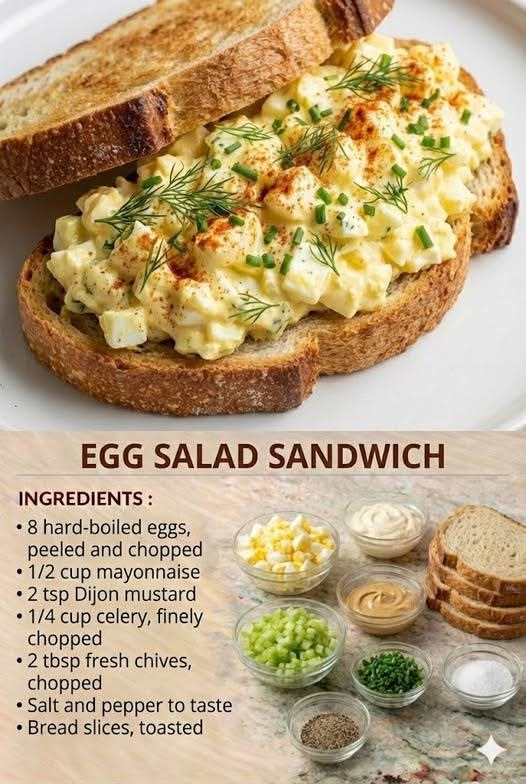
The Egg Salad Sandwich is a deceptively simple culinary creation that beautifully demonstrates two essential principles of food science: protein coagulation and emulsion stability. When eggs are heated, their proteins denature and coagulate, forming a firm yet tender structure. When yolks are combined with mayonnaise, we create a stable oil-in-water emulsion that delivers creaminess and cohesion.
Beyond its scientific elegance, the egg salad sandwich is a comfort food icon—soft, creamy, satisfying, and endlessly adaptable. From tea rooms to delis, picnic baskets to lunchboxes, it remains one of the most beloved sandwiches worldwide.
This deep dive explores history, ingredients, techniques, formation, nutritional benefits, preparation methods, and why lovers of classic cuisine continue to celebrate it.
The History of the Egg Salad Sandwich
Ancient Egg Consumption
Eggs have been consumed for thousands of years across civilizations. Boiled eggs were common in ancient Roman and Chinese cuisine.
Mayonnaise and Emulsions
Mayonnaise originated in Europe in the 18th century, becoming widely popular for its rich texture and preservative qualities.
Sandwich Evolution
The modern sandwich gained prominence in the 18th century in England, named after John Montagu, the 4th Earl of Sandwich.
American Popularity
By the late 19th and early 20th centuries, egg salad became a staple in American households due to:
- Affordability
- Simplicity
- High protein content
- Easy preparation
It quickly became a lunch counter classic and remains a deli standard today.
Food Science Foundation
1. Protein Coagulation
When eggs are heated:
- Proteins unfold (denature)
- They bond with each other
- Water becomes trapped
- Texture transforms from liquid to solid
Overcooking tightens proteins too much, causing rubbery texture and green sulfur ring formation.
2. Emulsion Stability
Mayonnaise is an oil-in-water emulsion stabilized by egg yolk lecithin.
Proper mixing:
- Disperses oil droplets evenly
- Prevents separation
- Creates smooth mouthfeel
The egg salad sandwich depends on balancing coagulated egg whites with creamy emulsified yolks.
Ingredients
Core Ingredients
- 8 large eggs
- ½ cup high-quality mayonnaise
- 1 teaspoon Dijon mustard
- 1 tablespoon fresh lemon juice or white vinegar
- 2 tablespoons finely minced celery
- 1 tablespoon finely minced red onion or shallot
- Salt to taste
- Freshly ground black pepper to taste
- 1 tablespoon fresh chives or parsley (optional)
For the Sandwich Assembly
- 8 slices soft sandwich bread (white, whole wheat, brioche, or sourdough)
- Butter (optional, thin layer for moisture barrier)
- Lettuce leaves (optional)
- Paprika for garnish
Step-by-Step Instructions
Step 1: Perfectly Cook the Eggs
- Place eggs in saucepan.
- Cover with cold water (1 inch above eggs).
- Bring to gentle boil.
- Once boiling, cover and remove from heat.
- Let sit 10–12 minutes.
- Transfer immediately to ice bath for 10 minutes.
Scientific Note: Rapid cooling prevents overcoagulation and sulfur reaction.
Step 2: Peel and Chop
- Gently tap eggs on counter.
- Peel under running water.
- Separate 2 yolks and reserve for extra creaminess.
- Chop whites into small, uniform pieces.
Uniform cutting ensures consistent texture distribution.
Step 3: Create the Emulsion Base
- Mash reserved yolks in bowl.
- Add mayonnaise, mustard, lemon juice.
- Whisk until smooth and glossy.
This reinforces emulsion stability and ensures silkier consistency.
Step 4: Combine and Fold
- Add chopped eggs to dressing.
- Fold gently using spatula.
- Add celery, onion, herbs.
- Season with salt and pepper.
- Chill for at least 30 minutes.
Chilling allows flavors to integrate and texture to firm slightly.
Formation & Assembly
Moisture Barrier Technique
Spread thin layer of butter on bread to:
- Prevent sogginess
- Improve structural integrity
Layering Strategy
- Bread slice
- Lettuce leaf (optional structural layer)
- Thick egg salad layer
- Sprinkle paprika
- Top slice
Cut diagonally for traditional presentation.
Texture Control Methods
Chunky Style
Rough chop eggs for rustic texture.
Smooth Deli Style
Pulse lightly in food processor for fine consistency.
Whipped Version
Blend yolks with mayo separately, then fold whites gently for airy texture.
Alternative Cooking Methods
Steamed Eggs
Steam for 12 minutes instead of boiling for easier peeling.
Pressure Cooker Method
Cook at high pressure for 5 minutes + quick release + ice bath.
Sous Vide Method
Cook at 170°F (77°C) for 45 minutes for precision doneness.
Flavor Variations
Classic American
Add sweet pickle relish and dash of paprika.
French-Inspired
Add tarragon and cornichons.
Spicy Version
Add sriracha or cayenne pepper.
Avocado Fusion
Replace half mayo with mashed avocado.
Mediterranean
Add olives, capers, and olive oil drizzle.
Nutritional Benefits
High-Quality Protein
Eggs provide complete protein containing all essential amino acids.
Healthy Fats
Egg yolks contain beneficial fats and fat-soluble vitamins.
Choline Content
Supports brain function and cell membrane structure.
Affordable Nutrition
Low-cost yet nutrient-dense meal.
Common Mistakes to Avoid
- Overcooking eggs → rubbery whites.
- Skipping ice bath → gray yolks.
- Overmixing → mushy texture.
- Too much mayonnaise → greasy finish.
- Under-seasoning → bland profile.
Serving & Presentation Methods
- Classic sandwich triangles
- Open-faced on toasted sourdough
- Tea sandwich mini squares
- Croissant egg salad sandwich
- Stuffed in pita pockets
- Served over salad greens
Why Lovers Adore Egg Salad Sandwiches
Comfort Food Enthusiasts
It evokes nostalgia and simplicity.
Culinary Minimalists
Few ingredients, high reward.
Food Science Lovers
Perfect example of protein transformation and emulsion stability.
Busy Professionals
Quick prep, easy storage.
Picnic & Tea Party Hosts
Elegant yet approachable.
Storage & Food Safety
- Refrigerate immediately.
- Store in airtight container.
- Consume within 3 days.
- Keep below 40°F (4°C).
- Avoid leaving at room temperature over 2 hours.
Egg-based emulsions require careful temperature control.
Advanced Culinary Techniques
Ratio Optimization
Ideal balance:
- 1 tablespoon mayo per 2 eggs (adjust to taste).
Acid Balance
Acidity brightens richness and improves perceived freshness.
Salt Timing
Season lightly before chilling.
Adjust seasoning after chilling for accuracy.
Knife Precision
Even cuts ensure even mouthfeel distribution.
Conclusion
The Egg Salad Sandwich is far more than a humble lunch option—it is a culinary study in controlled heat application, protein chemistry, and emulsion engineering. From properly coagulated egg whites to the stabilized mayonnaise matrix binding it all together, every step contributes to texture, flavor, and structure.
It stands at the intersection of science and comfort, offering nutritional value, affordability, versatility, and timeless appeal. Whether served as a refined tea sandwich or a hearty deli classic, it continues to satisfy both culinary purists and casual food lovers alike.