Introduction
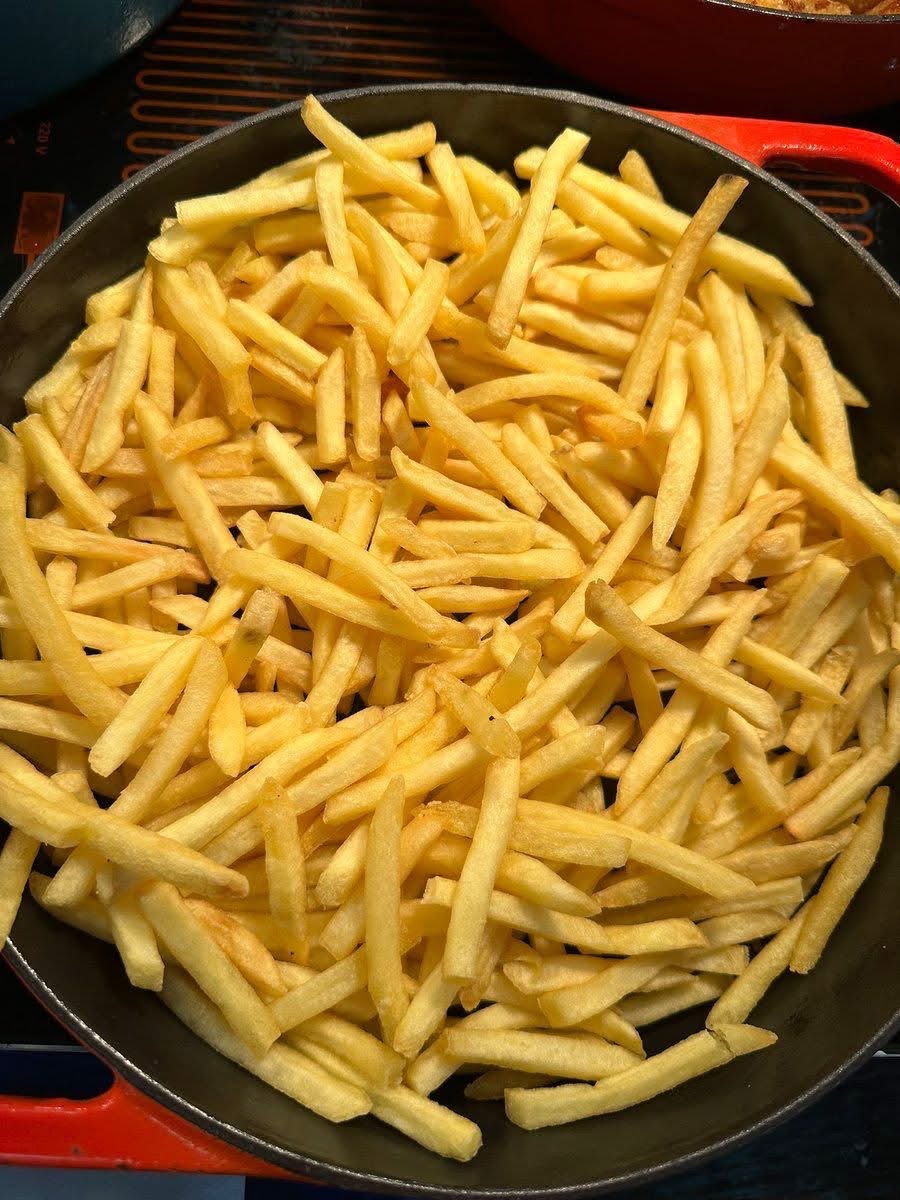
Crispy Homemade French Fries are one of the most beloved comfort foods around the world. Made from fresh potatoes and cooked until golden and crunchy, they are simple yet incredibly satisfying. Whether served as a snack, side dish, or party food, French fries have become a universal favorite enjoyed by people of all ages.
Making French fries at home allows you to control the ingredients, cooking method, and seasoning. Homemade fries often taste fresher and more flavorful than store-bought versions. When prepared properly, they have a crispy exterior and a soft, fluffy interior that makes every bite delicious.
Ingredients
Main Ingredients
- 4 large potatoes (Russet potatoes are best for fries)
- 4 cups vegetable oil or frying oil
- 1 teaspoon salt
Optional Seasonings
- 1/2 teaspoon black pepper
- 1/2 teaspoon garlic powder
- 1/2 teaspoon paprika
- 1/2 teaspoon onion powder
Optional Garnishes
- Chopped parsley
- Grated parmesan cheese
Optional Dipping Sauces
- Ketchup
- Mayonnaise
- Garlic sauce
- Cheese sauce
Preparation Method
Step 1: Choose the Right Potatoes
Russet potatoes are ideal for French fries because they have high starch content and low moisture, which helps create crispy fries.
Step 2: Wash and Peel
- Wash the potatoes thoroughly.
- Peel them if desired (you can keep the skin for rustic fries).
Step 3: Cut the Potatoes
- Slice the potatoes into even sticks about 1/4 inch thick.
- Try to keep the size consistent so they cook evenly.
Step 4: Soak the Potatoes
- Place the potato sticks in a bowl of cold water.
- Soak for 30 minutes to 1 hour.
Soaking removes excess starch, which helps make the fries crispier.
Step 5: Dry the Potatoes
Drain the potatoes and dry them thoroughly with a clean towel or paper towels. Removing moisture is essential for crispiness.
Cooking Methods
Method 1: Deep Frying (Traditional Method)
- Heat oil in a deep pan or fryer to 325°F (160°C).
- Add the potato sticks carefully.
- Fry for 4–5 minutes until slightly soft but not brown.
- Remove the fries and let them rest for 5 minutes.
Second Fry:
- Increase the oil temperature to 375°F (190°C).
- Fry the potatoes again for 2–3 minutes until golden and crispy.
- Remove and place on paper towels.
- Sprinkle with salt immediately.
Method 2: Oven-Baked Fries (Healthier Method)
- Preheat oven to 425°F (220°C).
- Toss potato sticks with 2 tablespoons oil and seasonings.
- Spread them in a single layer on a baking sheet.
- Bake for 30–40 minutes, flipping halfway through.
This method produces crispy fries with less oil.
Method 3: Air Fryer Fries
- Preheat air fryer to 380°F (193°C).
- Toss potatoes with 1 tablespoon oil.
- Place fries in the basket without overcrowding.
- Cook for 15–20 minutes, shaking the basket halfway through.
Air frying creates crispy fries with minimal oil.
Serving Suggestions
French fries can be served in many ways:
- As a side dish with burgers or sandwiches
- As a snack with dipping sauces
- Loaded with cheese and toppings
- With chili or gravy
- With herbs and parmesan for gourmet fries
History of French Fries
French fries have a long and interesting history. Despite their name, many historians believe fries originated in Belgium. In the 17th century, villagers reportedly fried small pieces of potatoes when fish was unavailable.
Later, French fries became popular in France and spread throughout Europe. American soldiers during World War I discovered the dish in Belgium and referred to them as “French fries” because French was commonly spoken there.
Over time, fries became a global fast-food staple and are now served in restaurants, cafes, and homes worldwide.
Nutritional Benefits
1. Energy Source
Potatoes contain carbohydrates that provide energy for the body.
2. Rich in Potassium
Potatoes are a good source of potassium, which helps regulate blood pressure.
3. Contains Vitamin C
Potatoes offer vitamin C that supports immune health.
4. Fiber (especially with skin)
Keeping the potato skin increases fiber content, which supports digestion.
5. Customizable Healthiness
Using air frying or baking methods reduces oil and calories.
Formation and Cooking Science
The crispy texture of French fries forms due to several cooking processes:
Starch Gelatinization
When potatoes cook, starch inside them softens and becomes fluffy.
Moisture Evaporation
Frying removes moisture from the outside, creating a crisp crust.
Double Frying Technique
The first fry cooks the inside of the potato, while the second fry creates the golden crunchy exterior.
Oil Temperature Control
Proper heat ensures fries cook evenly without absorbing too much oil.
Variations of French Fries
Curly Fries
Potatoes are spiral cut and seasoned with spices.
Sweet Potato Fries
Made using sweet potatoes for a sweeter flavor.
Garlic Parmesan Fries
Fries are tossed with garlic butter and parmesan cheese.
Loaded Fries
Topped with cheese, bacon, sour cream, and other toppings.
Why Food Lovers Enjoy French Fries ❤️
French fries are loved around the world because:
- They are crispy and satisfying.
- They pair well with many dishes.
- They can be seasoned in many ways.
- They are easy to share with friends and family.
The comforting smell of freshly fried potatoes often brings back memories of restaurants, fairs, and family meals.
Conclusion
Crispy Homemade French Fries are a timeless and delicious dish that can be enjoyed in many ways. With just a few simple ingredients—potatoes, oil, and salt—you can create a snack or side dish that is crunchy, flavorful, and satisfying.
By using proper preparation methods like soaking, drying, and double frying, anyone can make restaurant-quality fries at home. Whether baked, fried, or air-fried, French fries continue to be one of the most loved foods around the world.
For food lovers, nothing beats the taste of freshly made crispy fries served hot and golden. 🍟