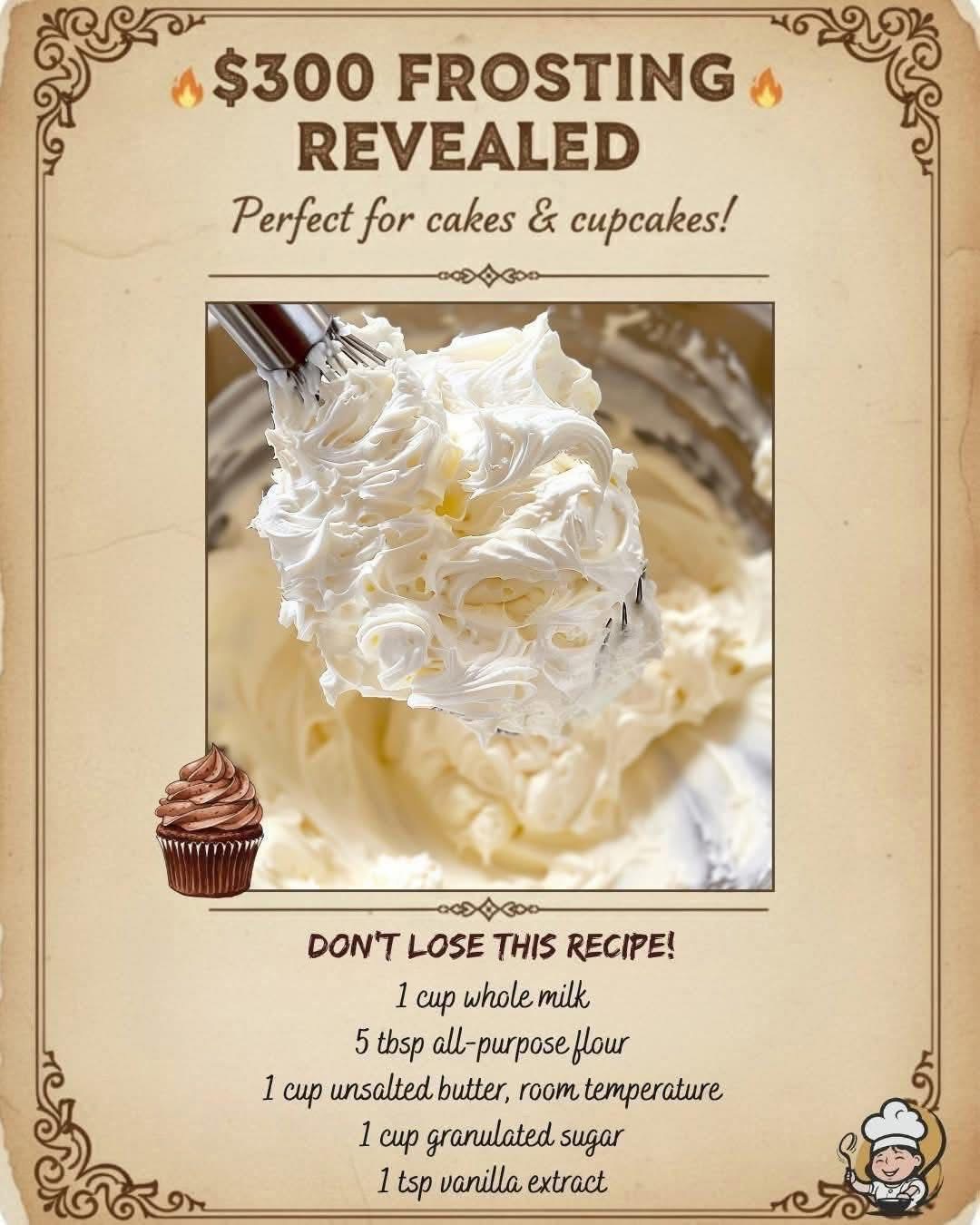
A Complete Guide with History, Ingredients, Methods, Benefits, and More
🌸 Introduction
Frosting is the sweet, creamy crown that transforms a simple cake or cupcake into a celebration centerpiece. Whether it’s for birthdays, weddings, holidays, or everyday indulgence, frosting adds flavor, texture, beauty, and personality to baked goods. From silky buttercream to glossy ganache, frosting has evolved into an art form loved by bakers and dessert lovers around the world.
This guide gives you everything — history, formation, ingredients, multiple methods, benefits, and why frosting lovers can’t get enough of it.
🍰 Classic Vanilla Buttercream Frosting Recipe (Large Batch)
This recipe makes enough to frost:
- 24 cupcakes generously
- 2–3 layer 9-inch cake
- 1 large sheet cake
🛒 Ingredients
- 2 cups (450g) unsalted butter, softened
- 8 cups (960g) powdered sugar, sifted
- 2 tablespoons pure vanilla extract
- 4–6 tablespoons heavy cream or milk
- ¼ teaspoon salt
Optional Add-Ins:
- Food coloring
- Cocoa powder (for chocolate frosting)
- Fruit puree
- Espresso powder
🥣 Instructions (Step-by-Step)
Step 1: Prepare the Butter
Beat softened butter using a stand mixer or hand mixer on medium speed for 3–5 minutes until pale and fluffy.
Step 2: Add Powdered Sugar Gradually
Add powdered sugar 1 cup at a time on low speed. This prevents a sugar cloud.
Step 3: Add Flavoring
Mix in vanilla extract and salt.
Step 4: Adjust Consistency
Add heavy cream 1 tablespoon at a time until desired texture is achieved:
- For spreading: softer consistency
- For piping: slightly firmer
Step 5: Final Whip
Beat on medium-high for 2–3 minutes until light and airy.
Your frosting is ready!
🧁 Methods of Making Frosting
There are several frosting methods, each with unique texture and taste:
1️⃣ American Buttercream (Easiest Method)
- Butter + powdered sugar + liquid
- Sweet, thick, beginner-friendly
2️⃣ Swiss Meringue Buttercream
- Egg whites + sugar heated
- Silky, less sweet
- Professional finish
3️⃣ Italian Meringue Buttercream
- Hot sugar syrup + whipped egg whites
- Stable and luxurious
4️⃣ Cream Cheese Frosting
- Butter + cream cheese
- Slightly tangy, perfect for carrot cake
5️⃣ Whipped Cream Frosting
- Heavy cream + sugar
- Light and airy
6️⃣ Ganache Frosting
- Chocolate + heavy cream
- Rich and glossy
🏛️ History of Frosting
Frosting dates back to the 17th century when sugar became more affordable. Early frostings were made by boiling sugar and spreading it over cakes to create a shiny, hardened surface.
In the 19th century:
- Buttercream became popular in Europe.
- Decorative piping techniques evolved.
- Wedding cakes became elaborate with thick icing layers.
Modern frosting gained popularity with home mixers in the 20th century, making creamy butter-based frostings easier to prepare.
🧬 Formation of Frosting (How It Works)
Frosting forms through emulsification and aeration:
- Butter traps air when whipped.
- Sugar stabilizes the mixture.
- Liquid binds ingredients.
- Fat coats sugar crystals for smooth texture.
The balance of fat + sugar + air creates the creamy structure.
If too stiff → add liquid
If too soft → add sugar
If grainy → beat longer
🌟 Benefits of Frosting
While frosting is a treat, it does have some benefits:
- Provides quick energy (from sugar)
- Improves moisture retention in cakes
- Acts as a protective layer against air
- Enhances visual appeal
- Adds flavor complexity
- Boosts mood (sweet foods stimulate serotonin)
In moderation, frosting is part of joyful celebrations.
❤️ Frosting Lovers
Frosting lovers appreciate:
- The creamy texture
- Decorative artistry
- Flavor combinations
- Nostalgic comfort
- Celebration memories
Some people even prefer frosting over cake!
Popular flavor lovers enjoy:
- Chocolate
- Vanilla bean
- Strawberry
- Cookies & cream
- Salted caramel
- Mocha
🎨 Decorative Methods
Frosting can be used in many artistic ways:
- Piping rosettes
- Writing messages
- Creating flowers
- Smooth finish with spatula
- Textured rustic style
- Ombre coloring
- Drip cakes
- Fondant base support
Tools used:
- Piping bags
- Spatulas
- Bench scraper
- Turntable
- Decorative tips
🧊 Storage Methods
- Room temperature: 1–2 days (covered)
- Refrigerator: Up to 1 week
- Freezer: Up to 3 months
Before using chilled frosting:
- Bring to room temperature
- Re-whip for 2–3 minutes
⚖️ Troubleshooting Methods
Too sweet? → Add pinch of salt
Too runny? → Add powdered sugar
Too stiff? → Add cream
Separated? → Beat longer
Air bubbles? → Mix on low speed at end
🏁 Conclusion
Frosting is more than just a topping — it is an essential part of baking culture. From its historical roots to modern decorative art, frosting brings sweetness, creativity, and joy to every celebration.
Whether you prefer silky Swiss meringue, classic American buttercream, or rich ganache, there is a frosting style for every baker and every lover of sweets.
Frosting lovers understand one simple truth:
✨ A cake without frosting is just bread