Introduction
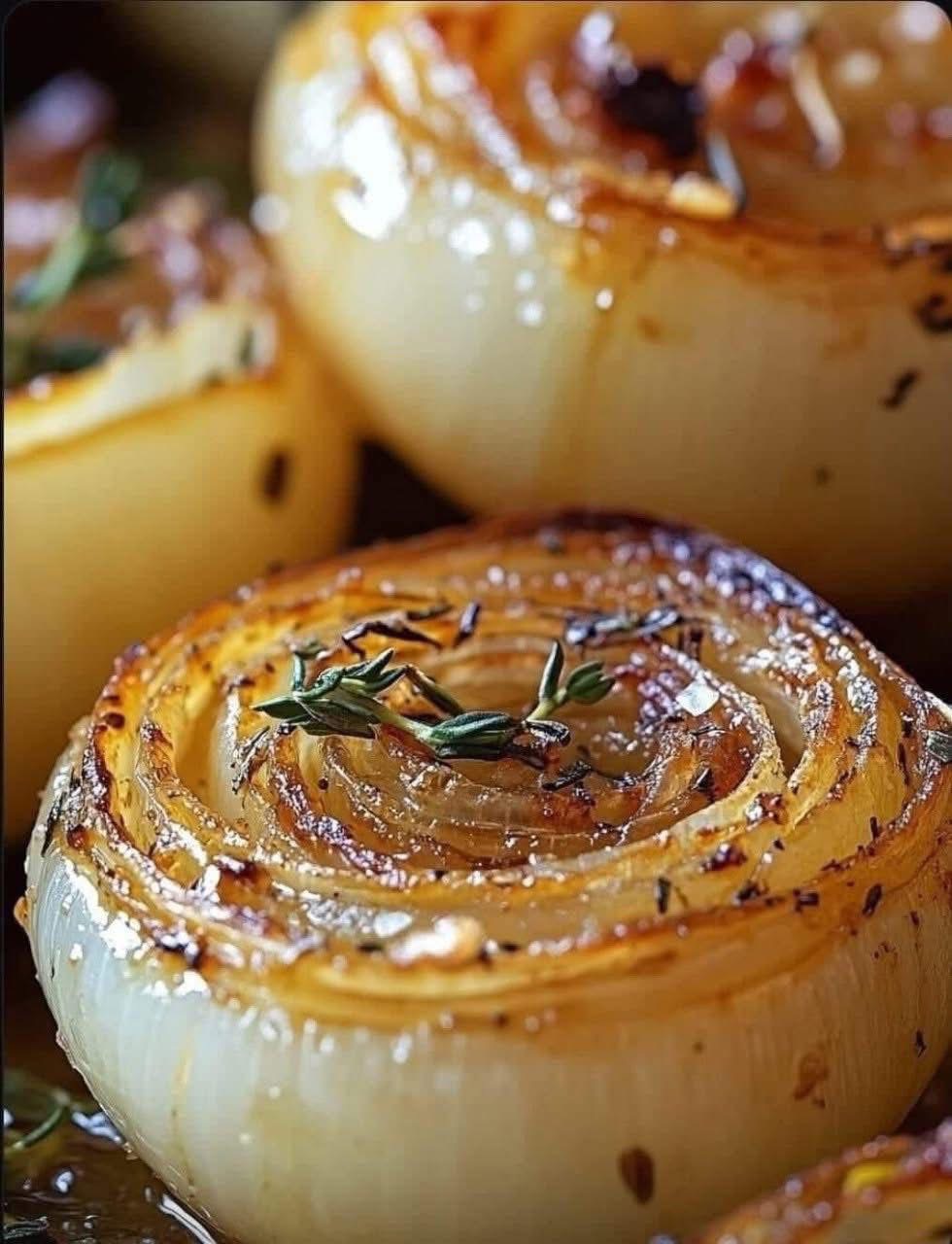
Roasted caramelized onions with thyme and butter are a timeless culinary treasure. Slow-cooked until golden brown and deeply sweet, onions transform from sharp and pungent to rich, silky, and almost jam-like. The addition of fresh thyme and creamy butter elevates them into a luxurious side dish, topping, or flavor base.
Whether layered onto steak, folded into pasta, spread over crusty bread, or used in soups, these onions bring warmth and depth to countless dishes.
🏛 History of Caramelized Onions
Onions have been cultivated for over 5,000 years, with origins traced to Central Asia. Ancient Egyptians considered onions sacred due to their circular layers symbolizing eternity.
Caramelizing onions became especially popular in French cuisine, most famously in French onion soup, where slowly browned onions form the foundation of the dish. European cooks mastered slow-cooking techniques using butter and herbs like thyme, creating the base for many sauces and savory dishes.
Today, caramelized onions are beloved worldwide in gourmet kitchens and home cooking alike.
🧈 Ingredients
Main Ingredients:
- 6 large yellow onions (about 1.5 kg / 3 lbs)
- 4 tablespoons unsalted butter
- 2 tablespoons olive oil
- 2 teaspoons fresh thyme leaves (or 1 teaspoon dried thyme)
- 1 teaspoon salt (adjust to taste)
- ½ teaspoon freshly ground black pepper
- 1 teaspoon sugar (optional, enhances caramelization)
- 2 tablespoons balsamic vinegar (optional, for depth)
- 2 tablespoons water or broth (if needed during cooking)
🔪 Preparation (Formation of the Dish)
1. Onion Preparation
- Peel onions.
- Slice them thinly into half-moons (uniform slices ensure even cooking).
- Separate layers gently.
2. Herb Preparation
- Strip thyme leaves from stems.
- Chop lightly if desired.
🍳 Cooking Methods
Method 1: Oven Roasted Method (Recommended)
- Preheat oven to 375°F (190°C).
- Place sliced onions in a large baking dish.
- Add butter (cut into small cubes) and olive oil.
- Toss with salt, pepper, thyme, and optional sugar.
- Spread evenly.
- Roast uncovered for 45–60 minutes.
- Stir every 15 minutes.
- If onions start drying, add 1–2 tablespoons water or broth.
- In final 10 minutes, drizzle balsamic vinegar if using.
- Cook until deep golden brown and tender.
Method 2: Stovetop Slow-Caramelization
- Heat butter and olive oil in a large heavy skillet over medium-low heat.
- Add onions and salt.
- Cook slowly for 35–50 minutes.
- Stir every few minutes.
- Lower heat if browning too fast.
- Add thyme midway through cooking.
- Finish with balsamic vinegar if desired.
- Cook until rich brown and jam-like.
Method 3: Slow Cooker Method
- Add onions, butter, oil, salt, thyme into slow cooker.
- Cook on LOW for 8–10 hours.
- Leave lid slightly open last hour to reduce moisture.
- Stir occasionally if possible.
🧪 How Caramelization Works (Scientific Formation)
Caramelization is a chemical process where natural sugars in onions break down under heat (around 230–320°F / 110–160°C).
During cooking:
- Water evaporates.
- Sugars concentrate.
- Amino acids react (Maillard reaction).
- Complex flavor compounds form.
- Color changes from white → golden → deep brown.
This transformation creates:
- Sweetness
- Umami depth
- Silky texture
- Rich aroma
🌿 Benefits of Roasted Caramelized Onions
1. Nutritional Benefits
- Rich in antioxidants
- Contains quercetin (anti-inflammatory compound)
- Supports heart health
- Provides vitamin C and B6
- High in fiber
2. Digestive Support
Cooking onions makes them easier to digest compared to raw onions.
3. Mood & Comfort Food Factor
Slow-cooked onions release comforting aromas that stimulate appetite and create warmth.
❤️ Why Food Lovers Adore Caramelized Onions
- Deep, sweet flavor
- Versatile in many dishes
- Affordable ingredient with gourmet result
- Pairs beautifully with meats, cheeses, breads, and vegetables
- Creates restaurant-quality flavor at home
Food lovers especially enjoy them in:
- Sandwiches
- Burgers
- Pasta
- Risotto
- Tarts
- Soups
- Flatbreads
🍽 Serving Suggestions
- Spread over toasted sourdough with goat cheese
- Layer into grilled cheese sandwiches
- Top steaks or roasted chicken
- Mix into mashed potatoes
- Add to pizza or savory tarts
- Stir into gravy or sauces
🧊 Storage & Make-Ahead Tips
- Refrigerate in airtight container for up to 5 days.
- Freeze in small portions for up to 3 months.
- Reheat gently over low heat or microwave in short bursts.
🔥 Professional Chef Tips
- Use a heavy-bottom pan for even heat.
- Never rush caramelization—low and slow is key.
- Add a pinch of baking soda to speed browning (very small amount).
- Deglaze pan with white wine for extra depth.
- Use a mix of butter and oil to prevent burning.
🏁 Conclusion
Roasted caramelized onions with thyme and butter are a beautiful example of culinary transformation. With just simple ingredients and patience, you can create a deeply flavorful dish that enhances nearly any meal.
From ancient kitchens to modern gourmet tables, this humble ingredient continues to win hearts. Rich, sweet, aromatic, and versatile — it’s no surprise that food lovers everywhere cherish the magic of slow-cooked onions.
Once you master this technique, you’ll find yourself making them again and again — because few things in cooking are as rewarding as perfectly caramelized onions