Introduction
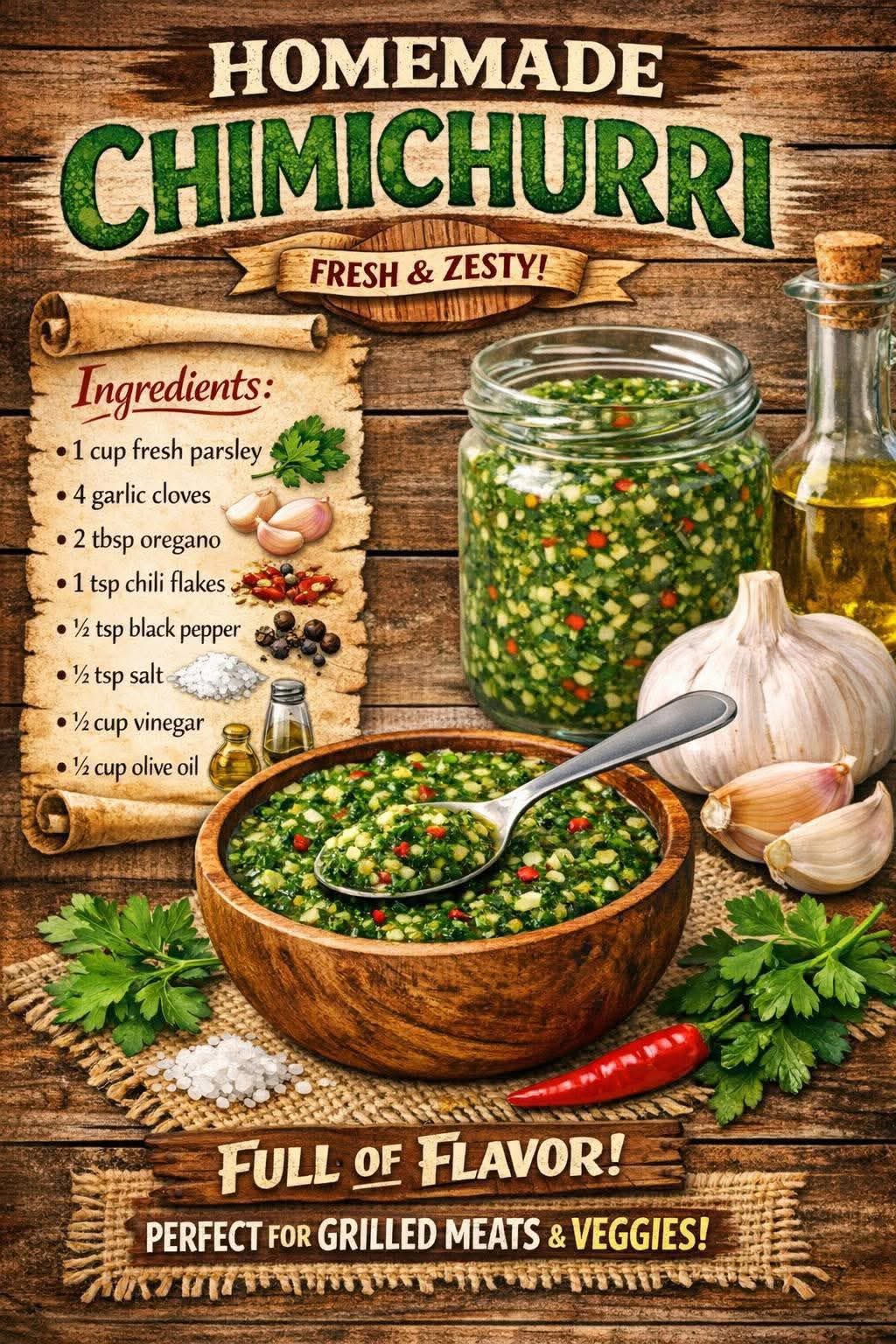
Chimichurri is a vibrant, herb-packed sauce that instantly transforms simple dishes into bold, flavorful meals. Originating from South America, this uncooked green sauce is known for its fresh parsley, garlic, olive oil, and tangy vinegar base. It is most famously served with grilled meats, but its versatility goes far beyond steak.
Bright, zesty, slightly spicy, and incredibly aromatic, homemade chimichurri is easy to prepare and far superior to store-bought versions. Below is a complete, in-depth guide including its history, ingredients, methods, formation (texture and balance), benefits, and why food lovers around the world adore it.
📜 History of Chimichurri
Chimichurri comes from Argentina and Uruguay, where it has been a staple condiment for generations. It is traditionally served with grilled beef during “asado” (barbecue gatherings).
There are different stories about the origin of its name:
- Some believe it came from Irish immigrants trying to say “Jimmy’s curry.”
- Others suggest it evolved from Basque settlers’ herb sauces.
- Over time, it became a signature sauce of Argentine cuisine.
Today, chimichurri is enjoyed worldwide and has many regional variations.
🧂 Ingredients (Classic Chimichurri Verde)
Fresh Ingredients:
- 1 cup fresh flat-leaf parsley (finely chopped)
- 3–4 cloves garlic (minced)
- 2 tablespoons fresh oregano (or 2 teaspoons dried oregano)
- 1 small shallot or 2 tablespoons finely minced red onion (optional)
- 1 small red chili or ½ teaspoon red pepper flakes
Liquid Base:
- ½ cup extra virgin olive oil
- 2–3 tablespoons red wine vinegar
- 1 tablespoon fresh lemon juice (optional but recommended)
Seasoning:
- ½ teaspoon salt (adjust to taste)
- ¼ teaspoon black pepper
🥣 Formation (Texture & Flavor Balance)
Chimichurri is not a smooth sauce like pesto. Its proper formation is:
- Coarsely chopped herbs
- Slightly chunky texture
- Loose and spoonable (not thick paste)
- Oil and vinegar well emulsified but not blended smooth
Flavor profile balance:
- Fresh (parsley)
- Sharp (garlic)
- Tangy (vinegar)
- Rich (olive oil)
- Mild heat (chili)
- Slight bitterness (oregano)
The key is balance — not too oily, not too acidic.
🔪 Preparation Methods
Method 1: Traditional Hand-Chopped (Recommended)
- Finely chop parsley by hand.
- Mince garlic and shallots very finely.
- Combine herbs, garlic, oregano, and chili in a bowl.
- Add salt and pepper.
- Stir in vinegar and lemon juice.
- Slowly pour in olive oil while stirring.
- Let rest at least 30 minutes before serving.
Why this method?
- Preserves texture
- Prevents bitterness
- Most authentic flavor
Method 2: Quick Food Processor Method
- Add parsley, garlic, oregano, and chili to processor.
- Pulse gently 3–5 times (do NOT over-blend).
- Transfer to bowl.
- Stir in oil and vinegar by hand.
- Rest 30 minutes.
Important: Over-processing makes it bitter and pasty.
Method 3: Mortar and Pestle (Old-World Style)
- Crush garlic with salt into paste.
- Add oregano and chili, grind gently.
- Fold in chopped parsley.
- Stir in oil and vinegar slowly.
This method gives deeper flavor extraction.
🥩 How to Use Chimichurri
Chimichurri lovers enjoy it with:
- Grilled steak
- Roasted chicken
- Grilled shrimp
- Lamb chops
- Grilled vegetables
- Sandwich spreads
- Marinade for meats
- Drizzle over roasted potatoes
- Mixed into rice or quinoa
It can be used as:
- A sauce
- A marinade
- A dipping condiment
- A finishing drizzle
💚 Health Benefits
Chimichurri isn’t just delicious — it’s nutritious.
1. Rich in Antioxidants
Parsley and oregano contain powerful plant compounds that fight inflammation.
2. Heart-Healthy Fats
Olive oil supports cardiovascular health.
3. Digestive Support
Garlic and vinegar may aid digestion.
4. Anti-Inflammatory Properties
Fresh herbs and garlic contain natural anti-inflammatory compounds.
5. Low Carb & Keto-Friendly
Naturally gluten-free and low in carbohydrates.
🔥 Variations
Chimichurri Rojo (Red Version)
Add:
- 1 tablespoon paprika
- 2 tablespoons tomato paste or roasted red pepper
Spicy Chimichurri
Add:
- Extra chili flakes
- Fresh jalapeño
Cilantro Chimichurri
Replace half the parsley with fresh cilantro for a brighter flavor.
🕒 Resting & Storage
- Let sit at least 30 minutes before serving.
- Best flavor develops after 2–4 hours.
- Store in airtight container in refrigerator up to 5 days.
- Bring to room temperature before serving.
Tip: Add a thin layer of olive oil on top before refrigerating to preserve color.
❤️ Why Food Lovers Adore Chimichurri
Chimichurri lovers appreciate it because:
- It enhances food without overpowering it.
- It is fresh, bold, and natural.
- It pairs with almost everything.
- It requires no cooking.
- It transforms simple grilled meat into restaurant-quality food.
- It brings people together at barbecues and gatherings.
Its bright green color and aromatic scent make it irresistible at the table.
🏆 Pro Tips from Experienced Cooks
- Always use fresh parsley (not curly for best flavor).
- Never blend until smooth.
- Adjust vinegar gradually.
- Taste and adjust salt after resting.
- For marinade use, add 1 extra tablespoon vinegar.
🌿 Conclusion
Homemade chimichurri is more than a sauce — it is a celebration of fresh ingredients and simple preparation. Rooted in South American tradition, it has become a global favorite for good reason. Its balance of herbs, garlic, oil, and vinegar creates a bold yet refreshing flavor that enhances countless dishes.
Whether you’re grilling for friends, preparing a family dinner, or experimenting in the kitchen, chimichurri offers endless possibilities. Once you make it fresh at home, you may never go back to bottled versions again.
For true chimichurri lovers, it’s not just a condiment — it’s a signature touch that brings food to life.