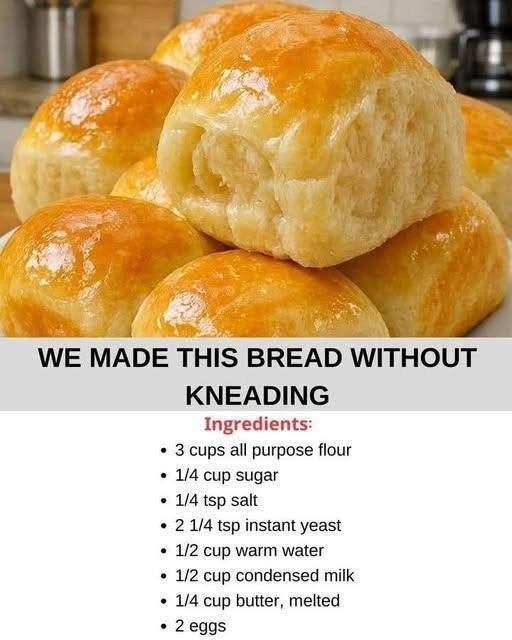
Here’s a full, detailed recipe for No‑Knead Bread (pane senza impasto) — a simple, rustic loaf you make without traditional kneading — including introduction, ingredients, instructions, methods, history, benefits, formation steps, conclusion, and a lovers section.
Introduction
No‑Knead Bread (often called pane senza impasto) is a wonderfully simple way to make bakery‑style bread at home without the effort of traditional kneading. Instead of pounding and folding the dough by hand, this recipe relies on a very wet dough and a long fermentation time to develop gluten naturally, resulting in a loaf with a crusty exterior and soft, airy crumb. The method has become beloved by home bakers because it uses minimal tools and hands‑on time yet produces impressive results.
History of No‑Knead Bread
The modern no‑knead method became globally famous in 2006 when New York baker Jim Lahey’s recipe was featured in The New York Times. While long resting doughs have roots in traditional bread making, Lahey’s technique — mixing flour, water, salt, and a tiny amount of yeast and letting time do the work — revolutionized home baking by showing you don’t need to knead for great flavor and texture.
Ingredients (for one rustic loaf)
- 410 g (about 3⅓ cups) all‑purpose or strong bread flour
- 360 ml (about 1½ cups) lukewarm water
- 3 g (about ½ tsp) active dry yeast (very little)
- 8 g (about 1½ tsp) fine salt
(Optional add‑ins: seeds, herbs, rolled oats, or whole grains) — these don’t affect the no‑knead principle but add flavor and texture.
Formation (Pre‑Prep Steps)
- Measure Ingredients Accurately — Weight is best, especially for flour and water.
- Prepare Tools — You’ll need a large mixing bowl, a wooden spoon, and either a Dutch oven with lid or a heavy oven‑safe pot with lid.
- Plan for Time — The magic of this method is time, not effort. You’ll plan for a long rise (about 12–20 hours).
Instructions
Mixing the Dough
- Mix Flour, Water, Yeast & Salt
- Place the flour in a large bowl.
- Add salt and mix.
- Dissolve the yeast in lukewarm water in a separate container.
- Pour water + yeast into flour and mix with a spoon until just combined — no kneading, no smooth dough, just a shaggy, sticky mass.
- First Fermentation (Long Rise)
- Cover the bowl loosely with plastic wrap or a lid.
- Let it rest at room temperature for 12–20 hours. You’ll see the dough become bubbly and doubled — this is good.
Shaping & Final Rise
- Shape the Dough
- Dust your work surface with flour.
- Gently turn the sticky dough out using a spatula.
- Shape lightly into a round by folding edges under — no traditional kneading needed.
- Second Rise
- Place the shaped dough on a floured towel or parchment and let rest 1–2 hours until puffy.
Baking
- Preheat Oven & Dutch Oven
- Place your Dutch oven (with lid) into the oven and preheat to 230 °C (450 °F) for at least 30 minutes.
- Bake Covered
- Transfer dough to the hot pot (with parchment) and cover.
- Bake 30 minutes covered.
- Uncover & Finish
- Remove the lid and bake 15–20 more minutes until golden brown crust forms.
- Cool Before Slicing
- Let cool completely on a rack — this improves texture and flavor.
Alternative Methods
No Dutch Oven (Sheet Pan Version)
If you don’t have a heavy pot:
- Bake on a preheated baking stone or sheet pan with a separate pan of hot water to mimic steam.
- It won’t be quite the same crust but still excellent.
Faster Version
Some no‑knead bread recipes ramp up yeast to shorten fermentation (to ~3–4 hours), producing a tasty loaf with less waiting but a slightly denser crumb.
Benefits of No‑Knead Bread
✔ Minimal Hands‑On Time — just mix and wait; no tiring kneading.
✔ Rustic Texture & Flavor — long fermentation enhances flavor without additives.
✔ Budget‑Friendly — uses basic pantry staples.
✔ Adaptable — easy to add seeds, herbs, whole grains, or spices to taste.
Nutritionally, bread made with whole grain flours or added seeds also provides sustained energy from complex carbohydrates and beneficial fiber.
For the Lovers of This Bread ❤️
No‑knead bread lovers adore:
- The crisp golden crust and airy interior.
- How simple the recipe is — you don’t need fancy tools or skills.
- Watching a basic mix turn into something celebrated and stunning.
- Customizing loaves with favorite flavors — olives, rosemary, grains, cheese, etc.
- The satisfaction of homemade bread aroma filling the kitchen.
Conclusion
No‑Knead Bread proves that great cooking doesn’t always mean hard labor — sometimes time and simplicity are the real magic. Born from traditional methods and popularized by modern home bakers, this loaf combines the ease of minimal work with the incredible reward of crusty, flavorful bread. Whether you’re a bread‑making newbie or a seasoned baker, this recipe is a fulfilling, budget‑friendly staple that delivers consistent, delicious results with pride