Introduction
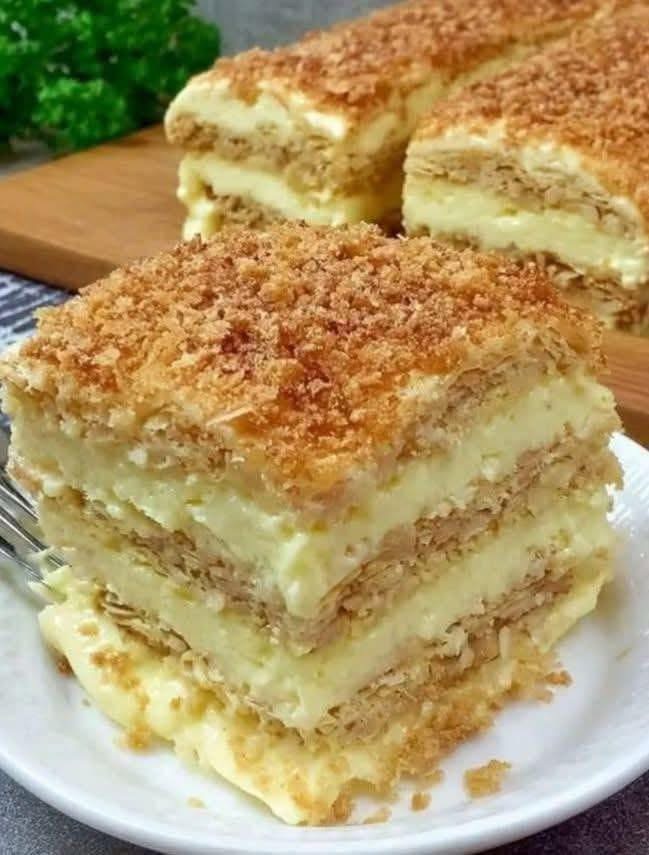
The Classic Napoleon Cake, also known as Mille-Feuille (“a thousand leaves”), is a legendary French pastry celebrated for its delicate, buttery layers and luscious pastry cream. This dessert features crisp puff pastry sheets sandwiched with rich, creamy custard and often topped with a dusting of powdered sugar or a drizzle of chocolate. Elegant yet comforting, the Napoleon Cake is perfect for special occasions, tea-time indulgence, or any moment when you want a slice of refined sweetness.
History of Napoleon Cake
The Mille-Feuille originated in France in the 17th century, evolving from layered pastries made by French bakers. Its exact origins are somewhat debated, but it became widely popular in the 18th and 19th centuries. Some legends suggest it was named after Napoleon Bonaparte, although there’s little historical proof he favored the dessert. Over the centuries, pastry chefs refined it into a signature French classic, admired for its combination of flaky pastry and velvety cream. Mille-Feuille became a staple in European patisseries and eventually worldwide, celebrated for its elegance and indulgence.
Ingredients
Makes 6–8 servings
For the Puff Pastry Layers:
- 1 package (about 17 oz / 500g) frozen puff pastry, thawed
- Flour, for dusting
For the Pastry Cream (Crème Pâtissière):
- 2 cups (480 ml) whole milk
- ½ cup (100 g) granulated sugar
- 4 large egg yolks
- 3 tbsp cornstarch
- 1 tsp vanilla extract
- 2 tbsp unsalted butter
For the Icing / Topping:
- ½ cup powdered sugar
- 1–2 tsp milk or lemon juice (for glaze)
- Optional: Melted chocolate for decoration
Method & Instructions
1. Preparing the Puff Pastry
- Preheat the oven to 400°F (200°C).
- Lightly flour a surface and roll out the puff pastry sheets to smooth creases.
- Cut into equal rectangles (~3×8 inches).
- Place on a parchment-lined baking sheet, prick lightly with a fork to prevent excessive puffing.
- Bake 12–15 minutes until golden and crisp. Cool completely.
2. Making the Pastry Cream
- In a saucepan, heat the milk until just simmering.
- In a separate bowl, whisk together egg yolks, sugar, and cornstarch until smooth.
- Slowly pour the hot milk into the egg mixture to temper, whisking constantly.
- Return the mixture to the saucepan and cook over medium heat, stirring constantly until thickened.
- Remove from heat, stir in butter and vanilla, then transfer to a bowl. Cover with plastic wrap directly on the surface to prevent a skin from forming. Cool completely.
3. Assembling the Napoleon Cake
- Place one puff pastry layer on a serving platter.
- Spread a thick, even layer of pastry cream.
- Repeat with remaining layers, finishing with a puff pastry layer on top.
- For topping, dust with powdered sugar or spread a thin glaze of sugar mixed with milk. Optionally, drizzle melted chocolate in a decorative pattern.
4. Chilling and Serving
- Refrigerate the assembled cake for at least 2–3 hours to allow layers to set.
- Slice carefully with a sharp knife for clean layers.
Benefits of Napoleon Cake
- Portion-Controlled Indulgence: Provides a rich dessert in manageable slices.
- Source of Energy: Combines carbohydrates, fats, and proteins for quick energy.
- Artisanal Experience: Making it from scratch develops pastry skills and patience.
- Visual & Flavor Appeal: Offers layers of texture—crisp pastry, smooth cream, and optional glaze—that delight both eyes and palate.
Formation & Presentation
- Layering: Alternating crisp pastry with creamy custard creates a striking visual and textural contrast.
- Decorative Topping: Powdered sugar, chocolate drizzle, or fresh berries can elevate presentation.
- Serving Tip: Use a serrated knife for neat slices. Serve on a cake stand or platter for elegance.
Conclusion
The Classic Napoleon Cake (Mille-Feuille) is a timeless dessert combining flaky puff pastry and velvety cream. Its refined layers and rich flavor make it a showstopper for celebrations, special dinners, or afternoon tea. Every bite offers a delightful contrast of textures, making it a luxurious treat worth savoring.
Lovers of Napoleon Cake
- Dessert enthusiasts seeking a sophisticated French pastry
- Home bakers wanting to master classic layered desserts
- Fans of creamy, buttery, and visually stunning sweets
- Anyone who enjoys indulgent, celebratory desserts for special occasions