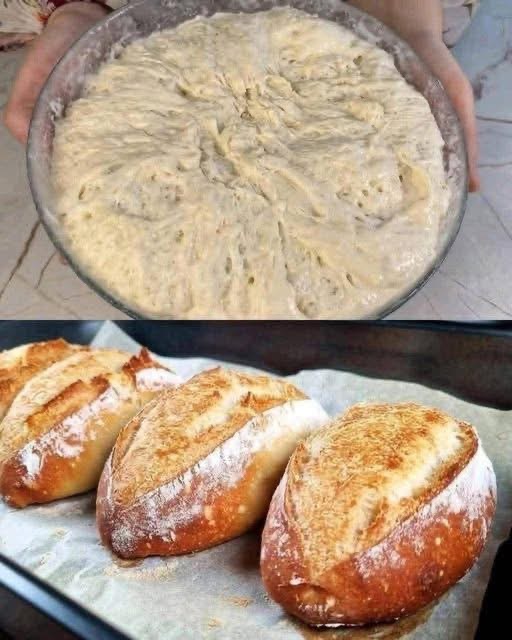
Old-World Flavor, Golden Crust, and Soft Heart
🌟 Introduction
Rustic Homemade Bread Loaves bring us back to the roots of traditional baking—simple ingredients, slow methods, and deeply satisfying results. This bread is known for its crackly crust, airy interior, and rich wheat aroma. It’s the kind of loaf that fills your kitchen with warmth and makes every meal feel special, whether served with soup, olive oil, or just a swipe of butter.
🧺 Ingredients
Basic Rustic Bread Dough:
- 4 cups (500 g) all-purpose flour or bread flour
- 1½ teaspoons salt
- 1 tablespoon sugar or honey
- 2¼ teaspoons (1 packet) active dry yeast
- 1½ cups (360 ml) warm water (not hot)
- 2 tablespoons olive oil (optional, for softer crumb)
Optional Add-Ins:
- Whole wheat flour (replace 1 cup)
- Seeds (sesame, flax, sunflower)
- Herbs (rosemary, thyme)
- Garlic or olives
👩🍳 Instructions
- In a small bowl, mix warm water, sugar, and yeast. Let sit 5–10 minutes until foamy.
- In a large bowl, combine flour and salt.
- Add yeast mixture and olive oil to the flour.
- Mix until a rough dough forms.
- Knead on a floured surface for 8–10 minutes until smooth and elastic.
- Place dough in a lightly oiled bowl, cover, and let rise 1–1½ hours, until doubled.
- Punch down the dough and divide into 2 loaves.
- Shape into round or oval rustic loaves.
- Place on a baking tray lined with parchment.
- Cover and let rise again for 30–40 minutes.
- Preheat oven to 425°F (220°C).
- Score the top of the loaves with a sharp knife.
- Bake for 25–30 minutes until golden brown and hollow-sounding when tapped.
- Cool on a wire rack before slicing.
🔥 Methods (Traditional Bread Techniques)
- Yeast Fermentation: Slow rising develops deep flavor.
- Hand Kneading: Builds gluten for structure and chew.
- Steam Baking (Optional): Place a pan of hot water in the oven for a crisp crust.
- Scoring: Allows controlled expansion during baking.
📜 History & Origin
Rustic bread dates back thousands of years, when bread was baked in stone ovens using wild yeast. European countryside loaves—especially from France and Italy—were simple, crusty, and nourishing. This recipe honors that tradition while adapting it for modern home kitchens.
💪 Benefits of Rustic Homemade Bread
- No preservatives or chemicals
- Rich in carbohydrates for energy
- Can be made with whole grains for fiber
- Freshly baked bread improves digestion and satisfaction
- Economical and comforting
🧪 Formation (Texture, Taste & Structure)
- Crust: Thick, golden, crunchy
- Crumb: Soft, airy with rustic holes
- Flavor: Mildly sweet, wheaty, deeply aromatic
- Color: Rustic brown with natural flour dusting
❤️ Lovers of Rustic Bread
This bread is loved by:
- Traditional bread lovers
- Home bakers and food artisans
- Families who value homemade meals
- Soup, stew, and olive oil enthusiasts
- Anyone who loves real, honest food
🍽️ Serving Methods
- Serve warm with butter or olive oil
- Perfect for sandwiches and toast
- Pair with soups, stews, and cheeses
- Use day-old bread for bruschetta or croutons
🌈 Conclusion
Rustic Homemade Bread Loaves are a celebration of simplicity and tradition. With just a few ingredients and a little patience, you can create bakery-quality bread at home. This recipe offers comfort, nourishment, and timeless flavor—one loaf at a time.